Why You’ll Love German Apricot Cake (Aprikosenkuchen) – Soft, Buttery, and Delicious Recipe
Soft and buttery: I love the tender cake texture and juicy apricot topping.
Simple ingredients: I can make this cake with everyday baking staples.
Fresh fruity flavor: Apricots, lemon zest, and almond extract create a delicious combination.
Perfect for any occasion: I enjoy it for breakfast, dessert, or afternoon coffee.
Easy to prepare: I only need 30 minutes of preparation before baking.
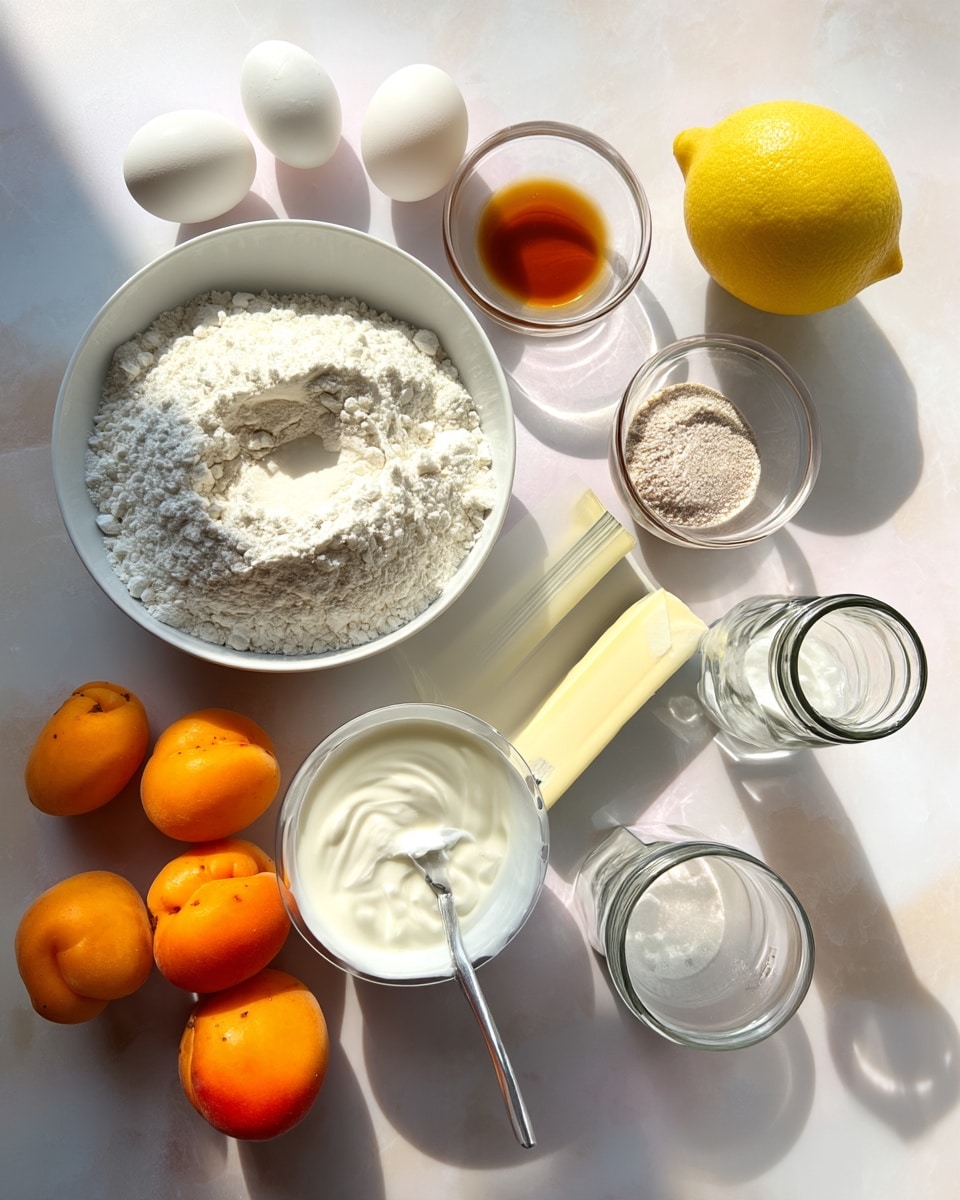
Ingredients
(Note: All ingredient amounts are listed in the recipe card below.)
Vanilla Cake Batter
150 grams all purpose flour
50 grams whole wheat flour
1/4 teaspoon baking soda
1/2 teaspoon baking powder
200 grams granulated sugar
150 grams butter very soft
100 grams sour cream room temperature, full fat yogurt will work too!
3 eggs large, room temperature
1 lemon zested
1 teaspoon vanilla extract
1/2 teaspoon almond extract
Apricots
5-6 apricots small
30 grams all purpose flour
2 tablespoons granulated sugar or vanilla sugar
Directions
Step 1: Preheat the Oven
I preheat my oven to 350°F (175°C) and position the rack in the center. I line a 9-inch springform pan with parchment paper or grease it with baking spray.
Step 2: Prepare the Cake Batter
In a stand mixer bowl, I whisk together both flours, baking soda, and baking powder. I add the sugar, eggs, softened butter, almond extract, lemon zest, vanilla extract, and sour cream.
Using the paddle attachment, I mix for 10 seconds on low, 10 seconds on medium-high, and 10 seconds on high speed. I scrape the bowl as needed, being careful not to overmix.
Step 3: Add the Apricots
I pour the batter into the prepared pan and smooth the surface. I wash, halve, and pit the apricots, then dip each half, skin side down, into the flour.
I arrange the apricots closely over the batter, covering as much of the surface as possible.
Step 4: Sprinkle and Chill
I sprinkle the cake with granulated or vanilla sugar, then refrigerate it for 5 minutes before baking.
Step 5: Bake the Cake
I bake the cake for 30 minutes, rotate the pan 180 degrees, and continue baking for another 25–30 minutes. I check that a toothpick inserted into the cake portion comes out clean.
Step 6: Cool and Serve
I let the cake cool for 10 minutes, loosen the edges with a knife, and remove the springform ring. I allow it to cool for at least another 20 minutes before slicing.
Servings and Timing
Prep Time: 30 minutes
Cook Time: 1 hour
Total Time: 1 hour 30 minutes
Servings: 12
Calories: Approximately 282 kcal per serving
Difficulty: Easy
Equipment: Mixer and 9-inch springform pan
I love serving this cake slightly warm with coffee or vanilla ice cream.
Variations
Almond Apricot Cake: I sprinkle sliced almonds over the batter before baking.
Extra Lemon Flavor: I add more lemon zest for a brighter citrus taste.
Vanilla Apricot Cake: I increase the vanilla extract and omit the almond extract.
Peach Cake: I replace the apricots with fresh peach slices.
Yogurt Version: I use full-fat plain yogurt instead of sour cream.
Mixed Fruit Cake: I combine apricots with peaches or plums for extra fruity flavor.
Storage/Reheating
I store leftover German Apricot Cake in an airtight container in the refrigerator for 3–4 days. The sugar topping may soften slightly during storage.
For reheating, I warm individual slices in the microwave for 10–15 seconds or enjoy them cold.
I can also freeze individual slices for up to 2 months, wrapped tightly. I thaw them in the refrigerator before serving.
FAQs
1. Can I Use Canned Apricots?
Yes, I can use well-drained canned apricots, although I prefer fresh ones for the best texture.
2. Can I Use Frozen Apricots?
Yes, I use thawed and thoroughly drained apricots to avoid excess moisture.
3. What Type of Apricots Work Best?
I prefer small, ripe apricots, but slightly firm ones also soften beautifully during baking.
4. Can I Replace Sour Cream?
Yes, I often use full-fat plain yogurt as an easy substitute.
5. Why Did My Apricots Sink?
I find that overmixing can make the cake rise too much, allowing the apricots to sink. I mix the batter only briefly.
6. Can I Make This Cake Without a Springform Pan?
Yes, I can use a regular 9-inch cake pan lined with parchment paper.
7. How Do I Know When the Cake Is Done?
I insert a toothpick into the cake portion. If it comes out clean, the cake is ready.
8. Can I Make This Cake Ahead of Time?
Yes, I can bake it a day ahead and refrigerate it, although I prefer its texture when freshly baked.
9. What Can I Serve With Apricot Cake?
I love serving it with whipped cream, vanilla ice cream, plain yogurt, or coffee.
10. Can I Reduce the Sugar?
Yes, I can slightly reduce the sugar, but I keep in mind that it may affect the cake’s sweetness, moisture, and texture.
Conclusion
German Apricot Cake (Aprikosenkuchen) is a simple, buttery, and fruity dessert that I love making whenever fresh apricots are available. The soft vanilla cake, delicate lemon and almond flavors, and juicy apricot topping create a wonderful combination. Whether I serve it warm with coffee or as a dessert with ice cream, this classic cake is always a delicious homemade treat.
German Apricot Cake (Aprikosenkuchen) is a soft, buttery homemade cake topped with juicy fresh apricots and flavored with delicate hints of lemon, vanilla, and almond. This classic German dessert is perfect for breakfast, afternoon coffee, or serving slightly warm with whipped cream or vanilla ice cream.
Author:Amy
Prep Time:30 minutes
Cook Time:1 hour
Total Time:1 hour 30 minutes
Yield:12 servings
Category:Dessert
Method:Baking
Cuisine:German
Diet:Vegetarian
Ingredients
150 grams all-purpose flour
50 grams whole wheat flour
¼ teaspoon baking soda
½ teaspoon baking powder
200 grams granulated sugar
150 grams butter, very soft
100 grams sour cream, room temperature (full-fat plain yogurt may be substituted)
3 large eggs, room temperature
Zest of 1 lemon
1 teaspoon vanilla extract
½ teaspoon almond extract
5–6 small fresh apricots
30 grams all-purpose flour, for coating the apricots
2 tablespoons granulated sugar or vanilla sugar, for topping
Instructions
Preheat the oven to 350°F (175°C) and position the oven rack in the center. Line the bottom of a 9-inch springform pan with parchment paper or grease the pan thoroughly with baking spray.
In the bowl of a stand mixer, combine the all-purpose flour, whole wheat flour, baking soda, and baking powder. Whisk briefly to distribute the dry ingredients evenly.
Add the granulated sugar, room-temperature eggs, very soft butter, sour cream, lemon zest, vanilla extract, and almond extract to the mixing bowl.
Using the paddle attachment, mix the ingredients for 10 seconds on low speed, followed by 10 seconds on medium-high speed and 10 seconds on high speed. Scrape down the sides of the bowl as necessary. Avoid overmixing to maintain a soft, tender cake texture.
Transfer the prepared cake batter into the lined springform pan. Spread it evenly and smooth the surface using a spatula.
Wash the fresh apricots thoroughly, cut them in half, and remove the pits. Pat the apricot halves dry with a clean kitchen towel or paper towel.
Place the additional 30 grams of all-purpose flour in a shallow bowl. Lightly dip the skin side of each apricot half into the flour to help prevent the fruit from sinking too deeply into the batter.
Arrange the prepared apricot halves closely together over the cake batter, with the cut sides facing upward. Cover as much of the cake surface as possible without overlapping the fruit excessively.
Sprinkle the 2 tablespoons of granulated sugar or vanilla sugar evenly over the apricots and exposed cake batter.
Place the assembled cake in the refrigerator for approximately 5 minutes before baking to help the batter firm slightly.
Transfer the cake to the preheated oven and bake for 30 minutes. Carefully rotate the pan 180 degrees to promote even baking.
Continue baking for another 25–30 minutes, or until the cake is golden brown, the center is set, and a toothpick inserted into the cake portion comes out clean or with a few moist crumbs. Avoid inserting the toothpick directly into an apricot.
Remove the cake from the oven and allow it to cool in the springform pan for approximately 10 minutes.
Carefully run a thin knife around the edges of the cake to loosen it from the pan. Release and remove the springform ring.
Allow the cake to cool for at least another 20 minutes before slicing. Transfer to a serving plate if desired.
Slice the German Apricot Cake into 12 portions and serve slightly warm or at room temperature. Enjoy on its own or with whipped cream, vanilla ice cream, plain yogurt, or a cup of coffee.
Notes
Best Apricots: Use small, ripe, fresh apricots for the best flavor and texture. Slightly firm apricots also work well because they soften naturally during baking.
Canned Apricots: Well-drained canned apricots can replace fresh apricots. Pat them dry thoroughly to prevent excess moisture from affecting the cake.
Frozen Apricots: Thaw frozen apricots completely and drain away excess liquid before using. Pat dry before coating with flour.
Almond Apricot Cake: Sprinkle sliced almonds over the cake batter before baking for extra crunch and a delicious nutty flavor.
Extra Lemon Flavor: Increase the amount of fresh lemon zest for a brighter citrus flavor.
Vanilla Apricot Cake: Omit the almond extract and slightly increase the vanilla extract for a more pronounced vanilla flavor.
Peach Variation: Replace the apricots with fresh peach slices for a delicious alternative.
Mixed Fruit Cake: Combine apricots with peaches, plums, or other stone fruits for additional flavor and color.
Yogurt Substitute: Replace the sour cream with an equal amount of full-fat plain yogurt for a slightly lighter, tangier cake.
Room-Temperature Ingredients: Use room-temperature eggs and sour cream along with very soft butter to help create a smooth, evenly mixed batter.
Avoid Overmixing: Mix the batter only until the ingredients are combined. Excessive mixing can affect the cake’s tender texture.
Preventing Sinking Fruit: Lightly coating the apricot halves with flour helps them stay closer to the surface while the cake bakes.
Alternative Baking Pan: A regular 9-inch cake pan lined with parchment paper can replace a springform pan, although removing the finished cake may require extra care.
Checking Doneness: Insert a toothpick into the cake portion rather than the fruit. The cake is ready when the toothpick comes out clean or with a few moist crumbs.
Reducing Sugar: The sugar can be reduced slightly if desired, but significant reductions may affect the cake’s sweetness, moisture, and overall texture.
Make-Ahead Tip: Bake the cake one day before serving and store it covered in the refrigerator. Allow it to come to room temperature or warm individual slices briefly before serving.
Serving Suggestions: Enjoy with freshly whipped cream, vanilla ice cream, plain yogurt, powdered sugar, or freshly brewed coffee.
Refrigerator Storage: Store leftover German Apricot Cake in an airtight container in the refrigerator for up to 3–4 days. The sugar topping may soften slightly during storage.
Reheating: Warm individual cake slices in the microwave for approximately 10–15 seconds, or enjoy them chilled or at room temperature.
Freezer Storage: Wrap individual cake slices tightly in plastic wrap and place them in a freezer-safe container. Freeze for up to 2 months for the best quality.
Thawing: Transfer frozen slices to the refrigerator and allow them to thaw completely before serving.
Nutrition information is estimated per serving and may vary depending on the size of the apricots, ingredient brands, and exact portion sizes.