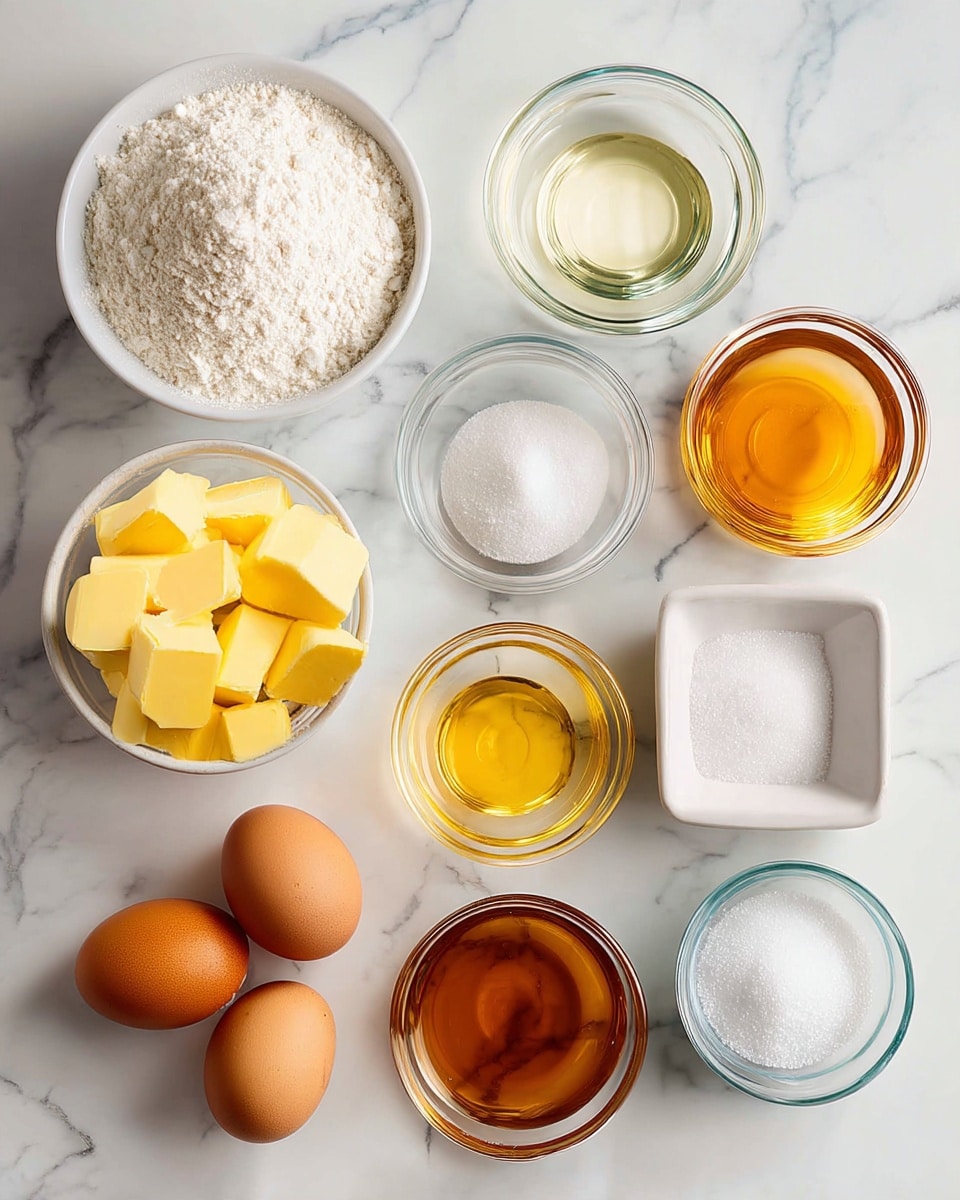
I love this Madeleine recipe because it uses basic baking ingredients and produces light, fluffy cakes with a rich buttery flavor. The preparation is straightforward, and the results look elegant. I especially enjoy serving them freshly baked when their edges are slightly crisp and their centers remain tender.
Ingredients
(Note: All ingredient amounts are listed in the recipe card below.)
160 g AP Flour 1 1/3 C
160 g Granulated Sugar About 3/4 C
4 Eggs
1/2 C Butter
1 Tsp Vanilla
1/2 Tsp Baking Powder
1/8 Tsp Salt
Directions
Step 1: Prepare the Oven and Molds
I preheat the oven to 375°F (190°C) and generously butter the Madeleine molds. I melt the butter and set it aside to cool slightly.
Step 2: Mix the Dry Ingredients
I sift together the flour, baking powder, and salt in a bowl to remove lumps and create a lighter texture.
Step 3: Beat the Eggs
I beat the eggs for approximately 5 minutes until pale, fluffy, and doubled in volume. I add the vanilla, then gradually beat in the sugar.
Step 4: Combine the Batter
I gently fold the flour mixture into the eggs in batches using a spatula. I slowly pour in the melted butter and mix carefully until smooth.
Step 5: Fill the Molds
I spoon the batter into the prepared Madeleine molds, filling each cavity about three-quarters full.
Step 6: Bake and Cool
I bake for 8–10 minutes until the edges turn golden brown. I let the cakes cool in their molds for 1 minute before transferring them to a cooling rack.
Servings and Timing
Servings: 30 Madeleines
Prep Time: 15 minutes
Cook Time: 15 minutes
Total Time: 45 minutes
Course: Dessert
Cuisine: French
Oven Temperature: 375°F (190°C)
Variations
Lemon Madeleines: I add fresh lemon zest for a bright citrus flavor.
Chocolate Madeleines: I replace a little flour with cocoa powder.
Almond Madeleines: I add a small amount of almond extract.
Orange Madeleines: I mix in finely grated orange zest.
Chocolate-Dipped Madeleines: I dip the cooled cakes in melted chocolate for extra richness.
Storage/Reheating
I store cooled Madeleines in an airtight container at room temperature for up to 2 days. For longer storage, I freeze them for up to 2 months.
To reheat, I warm them in a 300°F (150°C) oven for 3–5 minutes. I prefer serving them slightly warm for the best flavor and texture.
FAQs
1. What are Madeleines?
Madeleines are small French sponge cakes known for their distinctive shell shape and buttery flavor.
2. Do I need a special Madeleine pan?
I use a Madeleine pan to achieve the traditional shell shape, but I can use a mini muffin pan as an alternative.
3. Why should I beat the eggs thoroughly?
I beat the eggs until fluffy to incorporate air, which helps create a light and delicate texture.
4. Can I use silicone molds?
Yes, I use silicone molds when needed and increase the baking time by approximately 2–3 minutes.
5. How do I know when Madeleines are done?
I look for lightly golden edges and centers that spring back when gently touched.
6. Can I make the batter ahead of time?
Yes, I can refrigerate the batter for several hours before baking, although I prefer baking it fresh for this recipe.
7. Why are my Madeleines dense?
I find that insufficiently beaten eggs or overmixing the flour can produce a dense texture.
8. Can I add different flavors?
Yes, I enjoy adding lemon zest, orange zest, almond extract, or cocoa powder.
9. Can I freeze Madeleines?
Yes, I freeze completely cooled Madeleines in an airtight container for up to 2 months.
10. What can I serve with Madeleines?
I love serving them with tea, coffee, hot chocolate, or a light dusting of powdered sugar.
Conclusion
Classic French Madeleines are simple, elegant little cakes with a buttery flavor and wonderfully soft texture. I love how easily they come together with everyday ingredients. Whether enjoyed warm from the oven or served alongside a favorite drink, they’re a delightful homemade treat.
Classic French Madeleines are delicate, buttery sponge cakes with beautiful shell-shaped exteriors, lightly golden edges, and soft, airy centers. Flavored with vanilla and made from simple baking ingredients, these elegant little cakes are perfect served slightly warm with tea or coffee.
Author:Amy
Prep Time:15 minutes
Cook Time:15 minutes
Total Time:45 minutes
Yield:30 Madeleines
Category:Dessert
Method:Baking
Cuisine:French
Diet:Vegetarian
Ingredients
160 g (1 1/3 cups) all-purpose flour
160 g (about 3/4 cup) granulated sugar
4 large eggs
1/2 cup unsalted butter, melted and slightly cooled, plus extra for greasing the molds
1 teaspoon vanilla extract
1/2 teaspoon baking powder
1/8 teaspoon salt
Instructions
Preheat the oven to 375°F (190°C). Generously grease the cavities of a Madeleine pan with butter to prevent sticking and help create beautifully golden edges.
Melt the butter in a small saucepan over low heat or in the microwave. Set aside to cool slightly while preparing the remaining ingredients.
In a medium mixing bowl, sift together the all-purpose flour, baking powder, and salt. Set aside.
In a large mixing bowl, beat the eggs using an electric hand mixer or stand mixer for approximately 5 minutes, until pale, thick, fluffy, and nearly doubled in volume.
Add the vanilla extract to the beaten eggs. Gradually add the granulated sugar while continuing to beat until the mixture becomes light, smooth, and airy.
Add the sifted flour mixture to the egg mixture in two or three batches. Using a rubber spatula, gently fold the dry ingredients into the batter until just combined, taking care not to deflate the whipped eggs.
Slowly pour the slightly cooled melted butter into the batter. Fold gently until the butter is fully incorporated and the batter is smooth and evenly mixed. Avoid overmixing.
Spoon the prepared batter into the greased Madeleine molds, filling each cavity approximately three-quarters full. Do not overfill, as the cakes will expand during baking.
Place the Madeleine pan in the preheated oven and bake for approximately 8–10 minutes, or until the edges are lightly golden brown and the centers spring back when gently touched.
Remove the pan from the oven and allow the Madeleines to cool in their molds for approximately 1 minute.
Carefully loosen the Madeleines and transfer them to a wire cooling rack. Repeat with the remaining batter, greasing the molds again if necessary.
Serve the Classic French Madeleines slightly warm or at room temperature. Enjoy plain or with a light dusting of powdered sugar alongside tea, coffee, or hot chocolate.
Notes
For the best texture, use room-temperature eggs. They whip more easily and help create a light, airy sponge cake.
Beat the eggs thoroughly until pale, fluffy, and increased in volume. This step is essential for achieving the delicate texture of traditional French Madeleines.
Use melted butter that has cooled slightly before incorporating it into the batter. Very hot butter can deflate the whipped eggs and affect the texture.
Fold the flour mixture and melted butter into the batter gently to preserve as much air as possible.
A traditional Madeleine pan creates the signature shell shape. If unavailable, a mini muffin pan can be used, although the cakes will have a different appearance and may require adjusted baking times.
Generously grease metal Madeleine molds with butter to help prevent sticking and encourage evenly golden edges.
Silicone Madeleine molds can also be used, but baking may require approximately 2–3 additional minutes depending on the mold and oven.
Fill each mold approximately three-quarters full to allow enough room for the batter to rise without overflowing.
For Lemon Madeleines, add finely grated fresh lemon zest to the batter for a bright citrus flavor.
For Orange Madeleines, incorporate finely grated orange zest into the batter for a fragrant variation.
For Almond Madeleines, add a small amount of almond extract along with the vanilla extract.
For Chocolate Madeleines, replace a small portion of the all-purpose flour with unsweetened cocoa powder.
For Chocolate-Dipped Madeleines, dip one end of each completely cooled cake into melted chocolate and allow the coating to set before serving.
For a decorative finish, lightly dust the cooled Madeleines with powdered sugar before serving.
Madeleines are fully baked when their edges are lightly golden and their centers spring back when gently pressed.
Avoid overbaking, as Madeleines can become dry. Begin checking for doneness after approximately 8 minutes.
If the Madeleines turn out dense, the eggs may not have been beaten long enough or the batter may have been overmixed after adding the flour.
The batter can be prepared several hours ahead and refrigerated in a covered container. Allow it to become slightly more workable before portioning if necessary.
Madeleines taste best on the day they are baked, especially when served slightly warm with delicate, lightly crisp edges.
Store completely cooled Madeleines in an airtight container at room temperature for up to 2 days.
For longer storage, arrange cooled Madeleines in a freezer-safe airtight container or freezer bag and freeze for up to 2 months.
To reheat, place the Madeleines in a preheated 300°F (150°C) oven for approximately 3–5 minutes, until gently warmed.
Serve with tea, coffee, espresso, hot chocolate, or fresh berries for an elegant afternoon treat.
The stated preparation and baking times may vary depending on the number of cavities in the Madeleine pan and the number of batches required.
Nutrition information is estimated per Madeleine based on a yield of 30 cakes and does not include optional powdered sugar or chocolate coatings.