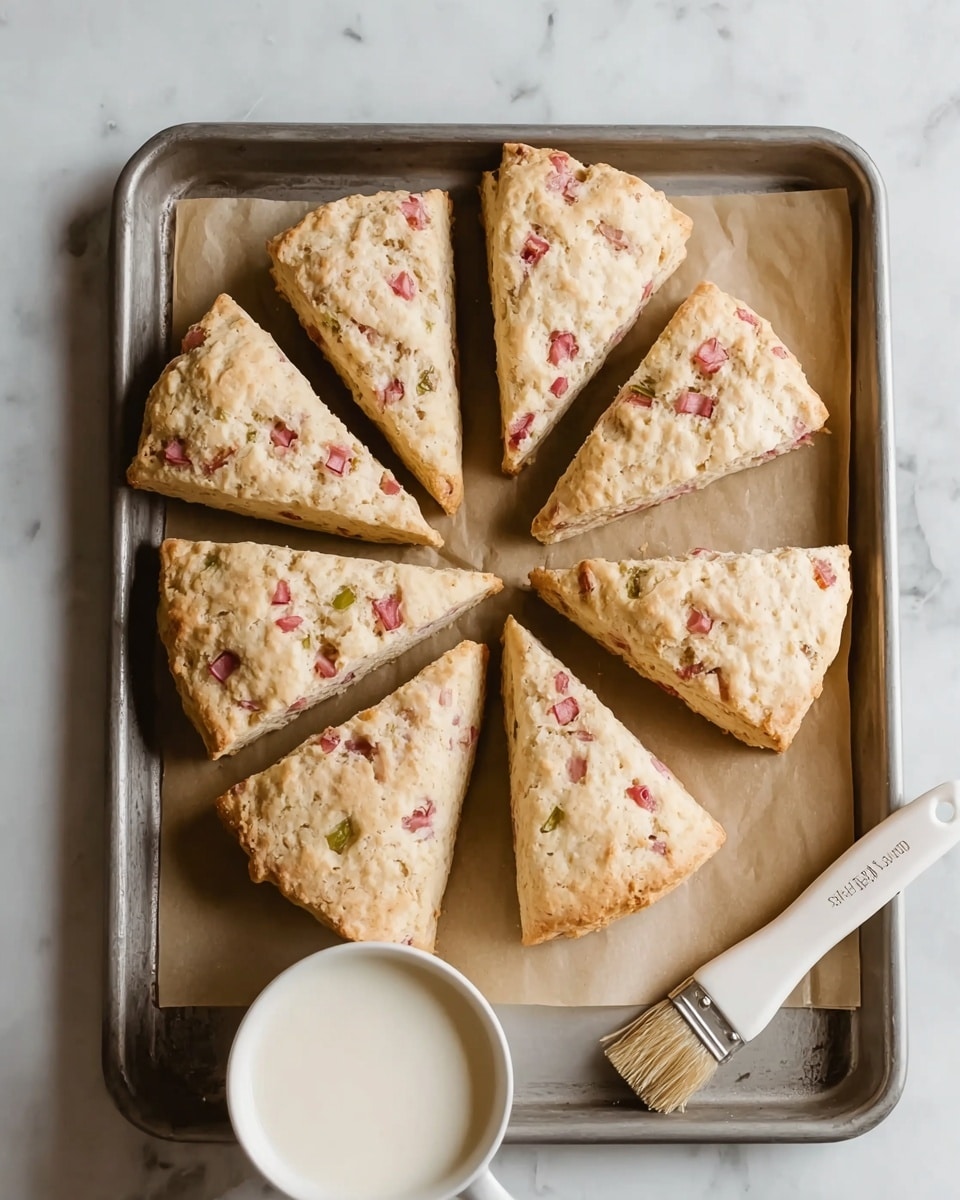
I love how simple and reliable this recipe is, especially when I want a homemade bake that feels special without being complicated. The combination of cold butter and buttermilk gives the scones a soft, flaky texture that I find irresistible. The rhubarb adds a vibrant tartness that keeps every bite interesting and not overly sweet.
I also appreciate how versatile this recipe can be. I can keep it classic, add strawberries for a fruity twist, or even roast the rhubarb first for a deeper flavor. The dough comes together quickly, and I always get beautifully golden, tender scones with minimal effort.
Ingredients
(Note: All ingredient amounts are listed in the recipe card below.)
2 1/2 cups (315g) all-purpose flour 1/2 cup (100g) granulated sugar 1 tbsp baking powder 1/2 tsp baking soda 1/2 tsp salt 1/2 cup (113g) cold unsalted butter, cut into cubes 1 cup fresh rhubarb, chopped into 1/2-inch pieces 3/4 cup (180ml) buttermilk, plus more for brushing 1 tsp vanilla extract 1 large egg
Optional for topping: Coarse sugar for sprinkling A light drizzle of honey or glaze after baking
Directions
I start by preheating the oven to 400°F (200°C) and lining a baking sheet with parchment paper. I keep the chopped rhubarb in the refrigerator until I am ready to use it so it stays cold.
In a large mixing bowl, I whisk together the flour, sugar, baking powder, baking soda, and salt until everything is evenly combined.
Next, I cut the cold butter into the flour mixture using a pastry cutter, fork, or my fingertips. I work it in until the mixture looks like coarse crumbs with small pea-sized bits of butter still visible.
I gently fold in the cold rhubarb pieces, lightly coating them in the flour mixture to help prevent them from sinking while baking.
In a separate bowl, I whisk together the buttermilk, vanilla extract, and egg until smooth.
I pour the wet ingredients into the dry ingredients and stir gently with a spatula or fork until a shaggy dough forms. I make sure not to overmix, since I want the scones to stay tender.
I turn the dough out onto a lightly floured surface and knead it gently 2–3 times just until it comes together. Then I pat it into a circle about 1 inch thick and cut it into 8 wedges using a sharp knife or bench scraper.
I arrange the wedges on the prepared baking sheet, brush the tops with a little buttermilk, and sprinkle with coarse sugar if I want extra crunch. I bake them for 18–22 minutes, until the tops are golden brown and the bottoms sound hollow when tapped.
Finally, I let the scones cool on a wire rack for 10–15 minutes before serving them warm. The rhubarb becomes soft and slightly jammy, adding moisture and bright flavor to every bite.
When I want a sweeter twist, I like to mix in chopped strawberries to create a strawberry rhubarb version. If I prefer a deeper, richer flavor, I sometimes roast the rhubarb with a little sugar before folding it into the dough.
For added texture, I occasionally stir in a handful of white chocolate chips or sprinkle sliced almonds on top before baking. If my rhubarb is especially tart, I toss it with a teaspoon of sugar before adding it to the dough. I also enjoy finishing the cooled scones with a simple glaze made from powdered sugar and milk for a bakery-style touch.
Storage/Reheating
I store leftover scones in an airtight container at room temperature for up to two days. If I want them to stay fresh a little longer, I refrigerate them for up to four days.
To reheat, I warm them in a 300°F oven for about 5–8 minutes until heated through. I sometimes microwave them for about 15–20 seconds, but I find the oven keeps the texture better. For longer storage, I freeze the baked and cooled scones in an airtight container for up to two months and reheat directly from frozen.
FAQs
Can I use frozen rhubarb instead of fresh?
I can use frozen rhubarb, but I make sure to keep it frozen until mixing and avoid thawing it first to prevent excess moisture in the dough.
How do I keep my scones tender?
I avoid overmixing the dough and handle it as little as possible. Keeping the butter and rhubarb cold also helps create a tender texture.
What if I don’t have buttermilk?
I make a quick substitute by mixing milk with a small amount of lemon juice or vinegar and letting it sit for a few minutes before using.
Why is my dough too sticky?
If the dough feels too sticky, I lightly flour my work surface and hands. I try not to add too much extra flour, since that can make the scones dense.
Can I make the dough ahead of time?
I sometimes shape the dough into wedges and refrigerate them on the baking sheet for up to a few hours before baking.
How do I know when the scones are done?
I look for golden tops and check that the bottoms sound hollow when tapped. The centers should feel set and not doughy.
Can I freeze the unbaked scones?
I freeze the shaped wedges on a baking sheet until solid, then transfer them to a container. I bake them straight from frozen, adding a few extra minutes to the baking time.
What glaze works best for these scones?
I like a simple mixture of powdered sugar and milk. I drizzle it over the cooled scones for a sweet finish.
Can I reduce the sugar?
I can slightly reduce the sugar if I prefer a more tart scone, especially if I plan to add a glaze on top.
Why did my scones spread too much?
If my scones spread too much, it is usually because the butter became too warm. I make sure all ingredients stay cold and chill the shaped dough briefly if needed.
Conclusion
I find these rhubarb scones to be the perfect way to celebrate fresh seasonal produce. The balance of sweet, buttery dough and tart rhubarb creates a flavor that feels both comforting and vibrant. Whether I serve them for brunch, share them with friends, or enjoy one with my morning coffee, this recipe always earns a spot in my collection of favorite homemade bakes.
These tender and buttery rhubarb scones are perfectly balanced with bright, tart pieces of fresh rhubarb in every bite. Soft, flaky, and lightly sweet, they make a beautiful addition to spring mornings, brunch, or afternoon coffee.
Author:Amy
Prep Time:15 minutes
Cook Time:20 minutes
Total Time:35 minutes
Yield:8 scones
Category:Breakfast
Method:Baking
Cuisine:American
Diet:Vegetarian
Ingredients
2 1/2 cups (315g) all-purpose flour
1/2 cup (100g) granulated sugar
1 tbsp baking powder
1/2 tsp baking soda
1/2 tsp salt
1/2 cup (113g) cold unsalted butter, cut into cubes
1 cup fresh rhubarb, chopped into 1/2-inch pieces
3/4 cup (180ml) buttermilk, plus more for brushing
1 tsp vanilla extract
1 large egg
Coarse sugar for sprinkling (optional)
Honey or glaze for drizzling (optional)
Instructions
Preheat the oven to 400°F (200°C) and line a baking sheet with parchment paper. Keep the chopped rhubarb refrigerated until ready to use.
In a large bowl, whisk together the flour, sugar, baking powder, baking soda, and salt until evenly combined.
Cut the cold butter into the dry ingredients using a pastry cutter, fork, or fingertips until the mixture resembles coarse crumbs with pea-sized pieces of butter.
Gently fold in the cold rhubarb, coating the pieces lightly with flour.
In a separate bowl, whisk together the buttermilk, vanilla extract, and egg until smooth.
Pour the wet ingredients into the dry ingredients and stir gently until a shaggy dough forms. Do not overmix.
Turn the dough onto a lightly floured surface and knead gently 2 to 3 times just until it comes together. Pat into a 1-inch thick circle and cut into 8 wedges.
Place the wedges on the prepared baking sheet. Brush the tops with buttermilk and sprinkle with coarse sugar if desired.
Bake for 18 to 22 minutes, until golden brown and the bottoms sound hollow when tapped.
Cool on a wire rack for 10 to 15 minutes before serving. Drizzle with honey or glaze if desired.
Notes
For a strawberry rhubarb variation, replace 1/2 cup of rhubarb with chopped strawberries.
If rhubarb is very tart, toss it with 1 teaspoon sugar before folding into the dough.
Store in an airtight container at room temperature for up to 2 days or refrigerate for up to 4 days.
Reheat in a 300°F oven for 5 to 8 minutes or microwave for 15 to 20 seconds.
Freeze baked scones for up to 2 months and reheat from frozen.