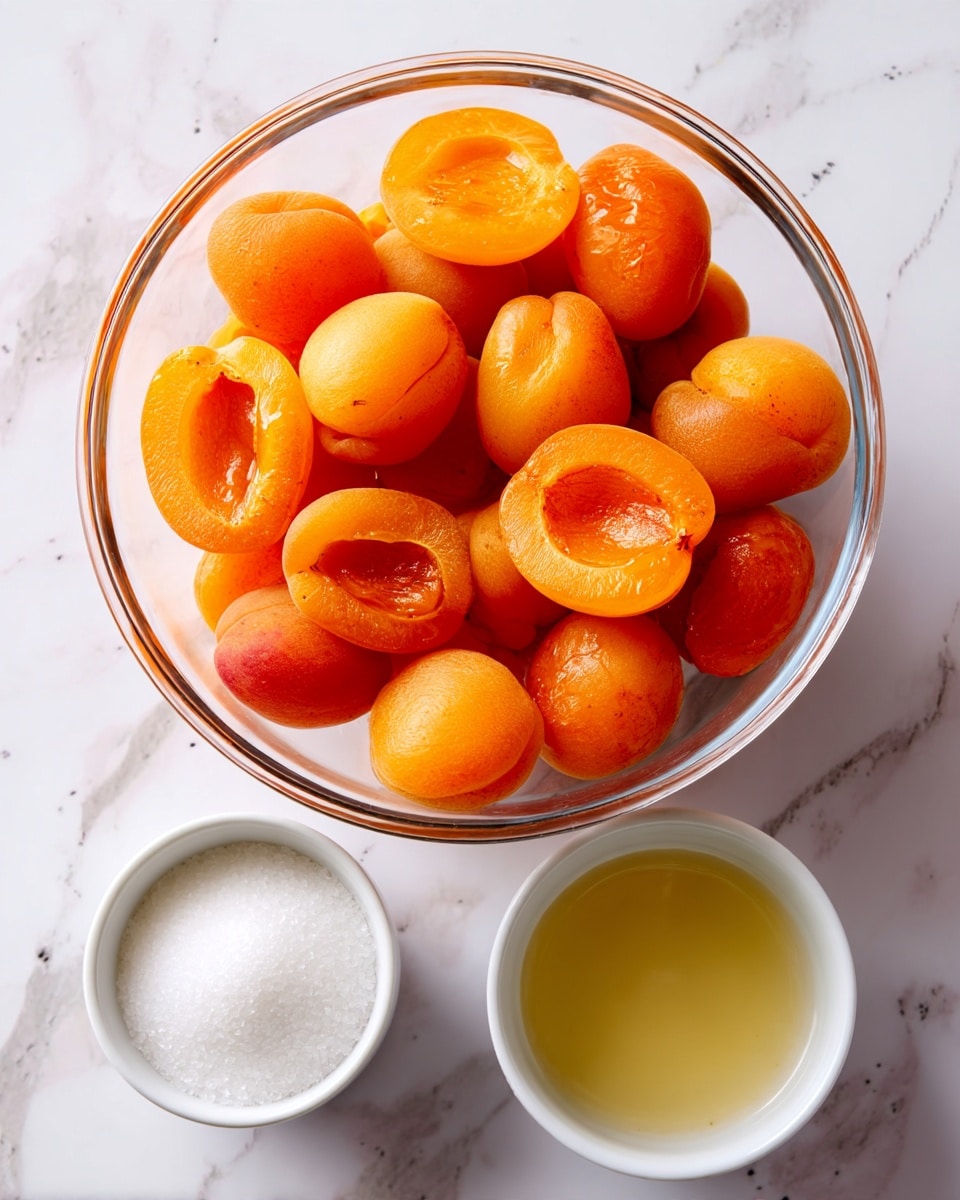
Only Three Ingredients: I use fresh apricots, lemon juice, and sugar.
No Added Pectin: I rely on the fruit’s natural pectin to help the jam thicken.
Fresh, Fruity Flavor: I love the balance of sweet apricots and tangy lemon.
Budget-Friendly: I save money by making jam when apricots are in season.
Versatile: I enjoy it on toast, pancakes, pastries, and desserts.
Great for Gifting: I like sharing homemade jars with family and friends.
Ingredients
(Note: All ingredient amounts are listed in the recipe card below.)
8 cups fresh apricots – peeled, pitted, and crushed
¼ cup lemon juice
6 cups white sugar
I prefer ripe, fragrant apricots for the best flavor. The lemon juice balances the sweetness, while the sugar helps create a thick, spreadable consistency.
Directions
Step 1: Prepare the Apricots
I gather my ingredients, then peel, pit, and crush the apricots.
Step 2: Combine the Ingredients
I place the apricots and lemon juice in a large pot over medium heat. I add the sugar gradually, stirring until it dissolves, and slowly bring the mixture to a boil.
Step 3: Cook the Jam
I continue cooking and stirring for about 25 minutes until the jam thickens. I remove it from the heat and skim off any foam.
Step 4: Prepare the Jars
I wash five 1-pint canning jars and keep them hot. I prepare the lids according to the manufacturer’s instructions.
Step 5: Fill and Seal
I ladle the hot jam into the jars, leaving ¼ inch of headspace. I remove air bubbles, wipe the rims, and secure the lids and rings.
Step 6: Process the Jars
I place the jars on a rack in a boiling-water canner, ensuring at least 1 inch of water covers them. The original recipe specifies 15 minutes of processing, but I verify the correct time using a tested canning recipe and adjust for altitude.
Step 7: Cool and Store
I remove the jars carefully and let them cool undisturbed for 12–24 hours. I check the seals and store properly processed jars in a cool, dark place. I refrigerate any unsealed jars.
Servings and Timing
Prep Time: 20 minutes
Cook Time: 45 minutes
Additional Time: 1 hour
Total Time: 2 hours 5 minutes
Servings: 50
Yield: 5 (1-pint) jars
I also allow 12–24 hours for the jars to cool completely before storing them.
Variations
I sometimes experiment with these flavors when making small batches for refrigeration:
Vanilla Apricot Jam: I add a little vanilla extract for a sweeter aroma.
Cinnamon Apricot Jam: I mix in a pinch of cinnamon for warmth.
Ginger Apricot Jam: I add freshly grated ginger for a slightly spicy flavor.
Apricot Peach Jam: I replace some apricots with ripe peaches.
Orange Apricot Jam: I add orange zest for a fresh citrus note.
Chunky Apricot Jam: I leave larger fruit pieces for a rustic texture.
I use a tested canning recipe for any variation I want to store at room temperature.
Storage/Reheating
Room Temperature: I store properly canned, sealed jars in a cool, dark place and use them within one year for the best quality.
Refrigerator: I refrigerate opened jars and aim to finish them within 3–4 weeks.
Freezer: I freeze jam in freezer-safe containers for up to 6–12 months for the best quality.
Reheating: I gently warm a small portion over low heat when I want a sauce for pancakes or desserts.
I always discard jam showing mold, fermentation, or other signs of spoilage.
FAQs
1. Can I Make Apricot Jam Without Pectin?
Yes, I use the natural pectin in apricots, along with sugar and lemon juice, to help the jam thicken.
2. Do I Need to Peel the Apricots?
I peel them for this recipe because I prefer a smoother texture.
3. How Do I Know When the Jam Is Ready?
I place a little jam on a cold plate. If it wrinkles slightly when pushed, I know it’s ready.
4. Why Is My Apricot Jam Runny?
I find that it usually needs more cooking time. I also remember that jam thickens as it cools.
5. Can I Use Frozen Apricots?
Yes, I can use thawed apricots for refrigerated or frozen jam. For canning, I follow a tested recipe that permits them.
6. Can I Reduce the Sugar?
I can reduce sugar for a refrigerated batch, but I use a tested low-sugar recipe for canning.
7. Why Does My Jam Turn Dark?
I notice that prolonged cooking and exposure to light or air can darken the jam.
8. Can I Use This Jam for Baking?
Absolutely. I love using it in cakes, cookies, pastries, and fruit tarts.
9. How Long Does Homemade Apricot Jam Last?
I aim to use properly canned, unopened jam within one year and refrigerate it after opening.
10. Can I Double the Recipe?
I prefer making separate batches because large quantities can cook unevenly and take longer to thicken.
Conclusion
Homemade Apricot Jam is a simple and delicious way for me to enjoy fresh apricots beyond their season. I love its naturally fruity flavor, smooth texture, and versatility. With just three ingredients and a little patience, I can make a wonderful homemade spread for breakfast, baking, or gifting.
Homemade Apricot Jam is a sweet, golden, fruity spread made with just three simple ingredients: fresh apricots, lemon juice, and sugar. This easy, no-added-pectin jam is perfect for toast, biscuits, pastries, baking, and gifting.
Author:Amy
Prep Time:20 minutes
Cook Time:45 minutes
Total Time:2 hours 5 minutes
Yield:5 (1-pint) jars, approximately 50 servings
Category:Condiment
Method:Stovetop
Cuisine:American
Diet:Vegan
Ingredients
8 cups fresh apricots, peeled, pitted, and crushed
¼ cup lemon juice
6 cups white sugar
Instructions
Gather all ingredients. Wash, peel, pit, and crush the fresh apricots until you have 8 cups of prepared fruit.
Place the crushed apricots and lemon juice in a large, heavy-bottomed pot over medium heat. Gradually add the white sugar, stirring continuously until completely dissolved.
Slowly bring the mixture to a boil, stirring frequently to prevent sticking or scorching.
Continue cooking for approximately 25 minutes, stirring regularly, until the jam thickens. To check consistency, place a small spoonful on a chilled plate and gently push it with your finger. If the surface wrinkles slightly, the jam is ready. Remove from heat and skim off any foam.
Wash five 1-pint canning jars and keep them hot. Prepare the lids according to the manufacturer’s instructions.
Carefully ladle the hot jam into the prepared jars, leaving ¼ inch of headspace. Remove trapped air bubbles, wipe the jar rims clean, and secure the lids and rings.
For shelf-stable storage, use a tested apricot jam canning recipe to confirm that the ingredients, jar size, headspace, and processing method are appropriate. Place the jars on a rack in a boiling-water canner with at least 1 inch of water covering them. The original recipe specifies 15 minutes of processing, but follow the processing time required by the tested recipe, including altitude adjustments.
Carefully remove the jars from the canner and place them on a towel-lined surface. Allow them to cool undisturbed for 12–24 hours.
Check that each jar has sealed properly. Store safely processed, sealed jars in a cool, dark place. Refrigerate any unsealed jars promptly.
Notes
Choose ripe, fragrant apricots for the sweetest flavor and best natural fruit aroma.
No added pectin is needed because the apricots contain natural pectin that helps the jam thicken during cooking.
For a smoother texture, peel the apricots before crushing. For a chunkier refrigerated jam, leave some larger fruit pieces.
Vanilla variation: Add a small amount of vanilla extract to a batch intended for refrigeration.
Cinnamon variation: Stir in a pinch of ground cinnamon for a warm, aromatic flavor.
Ginger variation: Add a little freshly grated ginger for a mildly spicy finish.
Apricot peach variation: Replace some of the apricots with ripe peaches for a refrigerated or frozen batch.
Orange variation: Add freshly grated orange zest for a bright citrus flavor.
Use a tested canning recipe for any flavored variation intended for room-temperature storage.
If the jam seems runny, cook it slightly longer and repeat the chilled-plate test. Remember that jam thickens further as it cools.
Frozen apricots may be thawed and used for refrigerated or frozen jam. For shelf-stable canning, follow a tested recipe that permits frozen fruit.
Reducing the sugar can affect consistency and preservation. Use a tested low-sugar canning recipe if you want shelf-stable jam with less sugar.
Do not automatically double the recipe. Prepare separate batches for more consistent cooking and thickening.
Store properly processed and sealed jars in a cool, dark place and use within 1 year for best quality.
Refrigerate opened jars and aim to use within 3–4 weeks.
Freeze jam in freezer-safe containers for 6–12 months for best quality, leaving adequate space for expansion.
Gently warm a small portion over low heat to create a delicious topping for pancakes, waffles, or desserts.
Serve on toast, croissants, biscuits, homemade bread, pancakes, pastries, or as a filling for cookies and cakes.
Discard jam showing mold, fermentation, unusual odors, or other signs of spoilage.
The total recipe time includes 1 hour of additional preparation and processing time but does not include the 12–24 hours required for jars to cool completely.
Food safety: The original 15-minute processing time is not independently validated for this formulation and 1-pint jars. Do not assume the jam is shelf-stable unless a tested canning recipe confirms the full procedure.
Nutrition
Serving Size:Approximately 3 tablespoons (1/50 of recipe)